

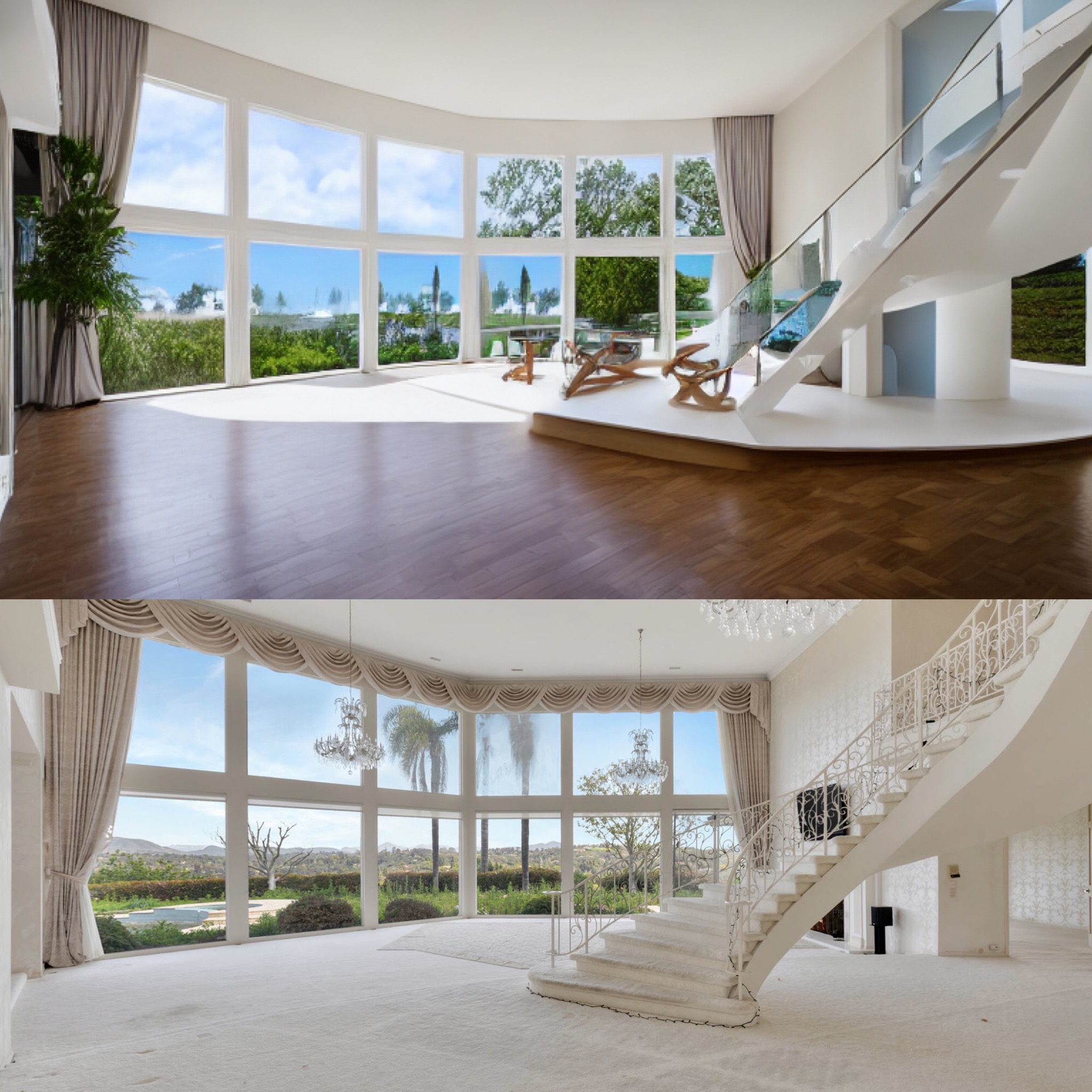
Selling a Luxury Fixer? The Best Buyer May Not Be an Investor
True Story – Imagine walking into an 11,000 /sqft estate and seeing the only furniture in the house is a futon, a gaming console and a bong. Then you walk outside and find a dead rat floating in the pool with tadpoles slowly eating it.
I’ve sold houses like this, and as bad as that sounds, the condition of the property usually isn’t the hardest part of selling it. Finding the right buyer is.
There are plenty of people willing to take on a fixer if there’s enough financial upside. On a normal-size house, the math can be fairly simple. Buy it at the right price, renovate it, sell it and move on.
But once the house gets much beyond 4,000 square feet, the buyer pool starts to shrink fast. At 8,000, 10,000 or 11,000 square feet, you’re dealing with something very different.
A luxury fixer isn’t just a larger version of a regular fixer. The costs are different. The risk is different. Most of all, the buyer is different.
Everything Gets More Expensive
Most fix-and-flip investors want projects they can turn around fairly quickly. They buy an as-is property, renovate it over several months, put it back on the market and move their money into the next deal.
That model gets much harder with a large estate. Almost every part of the project gets more expensive at the same time.
There’s more roof, more flooring, more glass, more landscaping and more bathrooms. The home may also have larger heating, cooling and electrical systems. On top of that, the finishes have to meet the expectations of a luxury buyer.
A kitchen renovation in a normal house might cost $50,000 or $75,000. In a large luxury home, it can easily run into several hundred thousand dollars. Custom cabinets, stone, appliances and higher-end finishes add up quickly.
Then there’s the bigger issue: time. A major renovation on a luxury estate can take a year or two. Sometimes longer.
During that time, someone is paying property taxes, insurance, utilities, maintenance, contractors and architects. There are usually plenty of smaller costs as well. Many of them don’t show up in the first rough estimate.
If the buyer borrowed money for the purchase or the renovation, interest is also adding up every month. When borrowing costs are high, that can have a big effect on the deal.
A project that looked attractive on the day it was purchased can look very different 18 or 24 months later.
Buyers Work Backward From the Finished House
A serious investor usually isn’t looking at a luxury fixer and simply asking, “How cheap can I buy it?”
They’re trying to figure out how much money they’ll have into the property by the time it’s finished. Then they want to know how much room is left for profit. That usually means building a pro forma.
They’ll estimate the purchase price, renovation costs, professional fees, financing, carrying costs and the likely value after the work is complete. In real estate, that final number is often called the ARV, or After Renovation Value.
This is where sellers and investors often start looking at the same property very differently.
Say a house can be purchased for $5 million, needs $3 million in work and could be worth $11 million when it’s finished.
At first glance, that sounds like a great deal. But an investor has to ask a few harder questions.
What if the renovation costs $4 million instead of $3 million? What if construction takes two years instead of one? What does the money cost during that time? And what happens if the luxury market is softer when the house is finally ready to sell?
There’s also another risk that gets overlooked: taste. Luxury buyers can be very particular.
An investor can spend hundreds of thousands of dollars creating a beautiful new kitchen, only to have a buyer walk through and say, “We’d probably redo this.”I’ve seen versions of that happen more than once.
That’s why an investor may offer much less than a seller expects, even when the finished property appears to be worth far more.
It doesn’t always mean they’re trying to steal the house. Sometimes the price simply has to be low enough to make the risk worthwhile.
The Buyer Pool Gets Small Fast
It’s easy to assume that a valuable luxury property will attract a long list of investors. In my experience, it usually doesn’t.
There are plenty of people who can buy a $1 million or $2 million fixer, renovate it and resell it. There are far fewer people who can buy a multimillion-dollar estate, put another few million dollars into it and carry the project for a couple of years. Even fewer actually want to.
That’s why, when I’m selling a luxury fixer, I’m usually looking for one of two buyers.
The first is a well-capitalized investor. Ideally, it’s someone local who already understands the neighborhood. They know what renovated homes really sell for. They know what construction costs. They also understand the level of finish buyers expect in that market.
Local knowledge matters for another reason. An experienced buyer may understand that the house itself isn’t always the most valuable part of the property. Sometimes it’s the land.
In Rancho Santa Fe, for example, a flat and usable lot with privacy, good views and very little road noise can be hard to replace.
A buyer who knows the area may walk through an outdated house and barely pay attention to the old kitchen or flooring. They’re looking at the lot, the location and what the property could become. That’s a very specific buyer, and there aren’t many of them.
The second buyer is completely different. It’s someone who wants to live there.
The End User Sees the Property Differently
An end buyer may have the same financial ability to renovate the estate, but they’re not looking at it the same way an investor does. They start imagining their own home.
They may see where the kitchen should go. They may picture how they would open up the living spaces or change the landscaping. Maybe they imagine their kids using the yard, restoring the tennis court or turning an old guest house into something useful again.
Because they plan to live there, they don’t need the same profit margin an investor needs.
They still care about value. Sophisticated buyers usually understand the numbers very well. But the property can be worth more to them because they’re buying it for themselves. That can make an end user a much stronger buyer.
I think sellers sometimes overlook this because the obvious assumption is that a fixer should be sold to a flipper. With a luxury estate, that may be exactly the wrong assumption.
The person willing to pay the most may be the person who plans to renovate it and stay there for years.
Finding That Buyer Is the Hard Part
I’ve sold luxury fixers in Rancho Santa Fe, and in both cases the eventual buyers were not easy to find. They came through relationships with other local agents.
That meant the process was much more direct than simply putting the property online and waiting.
I had to explain the opportunity, talk through what made the property unusual and get agents thinking about clients who might not have been searching for a fixer at all.

That matters because the right buyer may never go online and search for “large outdated estate that needs millions of dollars in work.”
They may be looking for acreage, privacy, a golf course view, a certain neighborhood, or a property where they can create something they haven’t been able to find already finished.
An agent who knows that buyer well can make the connection. A search portal usually can’t.
That’s one reason I think selling a luxury fixer is closer to matchmaking than traditional real estate marketing.
You’re not just advertising bedrooms, bathrooms and square footage. You’re trying to find someone who can look past the condition of the house and understand why the property itself is worth taking on.
Sometimes More Square Footage Is Actually a Problem
Sellers naturally look at square footage as value, and most of the time that makes sense. With a major fixer, though, more square footage can also mean more expense.
An outdated 7,000-square-foot house is still 7,000 square feet that someone has to renovate. If nearly every room and major system needs work, a buyer may not see all that space as a benefit. They may simply see more cost.
In some cases, the existing house may have very little value to a buyer who would rather start over. That doesn’t mean the property itself has little value.
A great piece of land in the right location can be worth a tremendous amount. It just means the seller needs to understand what they are really selling.
I’m not a big believer in trying to hide a serious fixer behind a quick cosmetic cleanup and an overly flattering description.
Obviously, clean the property up. Take care of the obvious distractions. And yes, remove the dead rat from the swimming pool. But buyers who can take on a project this large generally know what they’re looking at.
In some cases, they actually prefer that nobody did a rushed renovation before they arrived. They would rather buy the property as it is and make their own decisions than pay extra for finishes they plan to tear out.
A Luxury Fixer Needs a Different Sales Strategy
Broad market exposure still matters.
I’m not suggesting that a luxury fixer should be hidden from the market or quietly offered to a handful of people. But broad exposure by itself isn’t enough. A property like this needs to be worked directly.
That means talking to the local agents who know the serious buyers. It means staying in touch with investors and builders who understand large projects. It also means watching for buyers who have been looking for something very specific and haven’t found it yet.
You also need to understand the numbers well enough to talk honestly about the opportunity.
What could the property realistically be worth when it’s finished? What will it likely cost to get there? How long will the work take? At what point does the risk outweigh the upside? Those questions help determine who the real buyer is likely to be.
An investor may walk through the property thinking about construction costs, carrying costs and the profit they need at the end.
An end user may walk through the same house and start imagining what life there could look like.
Neither buyer is necessarily right or wrong. They’re simply looking at the property in different ways. When I’m selling a luxury fixer, I want to find both. That’s usually where the best opportunity for the seller is.
Thinking About Selling a Luxury Fixer?
If you own a large estate in San Diego that needs major work, the first question usually isn’t whether it can be sold. The better question is who is most likely to see the value in it.
That may be a local investor, a builder or an end user who has been waiting for the right property to create something of their own.
The sales strategy should be built around finding those buyers. A luxury fixer should not be marketed like a typical fixer.
I’ve sold luxury fixer properties in Rancho Santa Fe and understand how different these deals can be.
If you’re thinking about selling and want a realistic opinion on the property, the likely buyer pool and how I would approach the sale, contact me.
Jeff Toth
Founding Partner, LuxeAlly Real Estate
858.630.8997