
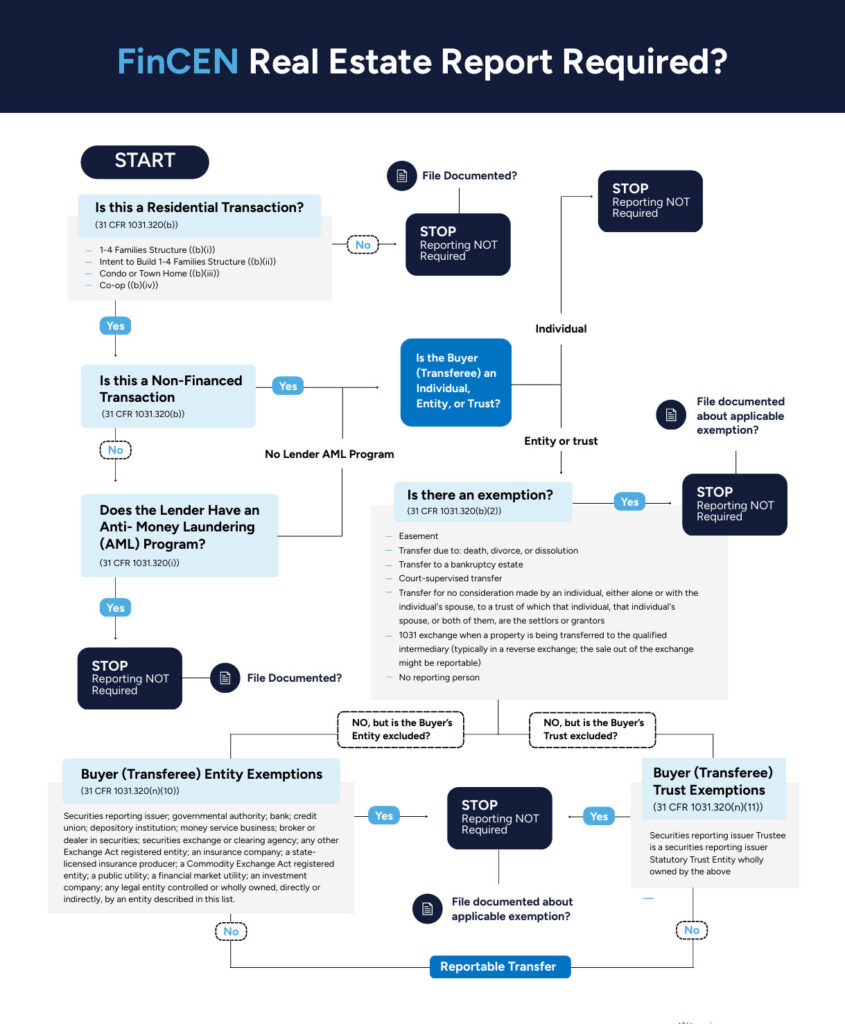
The new FinCEN Residential Real Estate Reporting Rule affects certain non-financed residential property transactions, especially when buyers use LLCs, corporations, or trusts. If you are buying or selling property in San Diego, understanding whether your transaction requires reporting under 31 CFR 1031.320 is critical before closing. See Detailed Fact Sheet
This guide explains how the FinCEN rule works, who it applies to, which transactions are exempt, and what San Diego buyers and sellers should consider.
What Is the FinCEN Real Estate Rule?
The Financial Crimes Enforcement Network (FinCEN) issued a federal rule requiring reporting of certain residential real estate transfers involving legal entities or trusts in non-financed transactions.
The rule is designed to increase transparency in cash and entity-based residential purchases.
It applies nationwide — including San Diego County.
When Does the FinCEN Rule Apply in San Diego?
The rule generally applies when:
-
The property is residential (1–4 family, condo, townhome, co-op)
-
The purchase is non-financed (no institutional lender with AML program)
-
The buyer is an entity or trust
-
No exemption applies
If all of those conditions are met, a Real Estate Report may be required.

San Diego FAQ: the most common FinCEN questions for 2026 real estate closings
Which San Diego Transactions Are NOT Reportable?
Some transactions are exempt, including:
-
Transfers due to death, divorce, or dissolution
-
Court-supervised transfers
-
Transfers to bankruptcy estates
-
Certain 1031 exchange transfers
-
Certain transfers involving securities reporting issuers
-
Certain governmental and regulated financial entities
-
Some trust structures (if qualifying under 31 CFR 1031.320(n))
Documentation of exemptions is critical.
Does the FinCEN Rule Affect Luxury Real Estate in San Diego?
San Diego’s luxury market often involves:
-
LLC purchases
-
Trust structures
-
Non-financed acquisitions
-
Privacy-driven buyers
Because of this, high-end transactions may be more likely to fall under FinCEN review than traditional financed home purchases.
If you are purchasing in La Jolla, Carlsbad, Encinitas, Rancho Santa Fe, Del Mar, or other high-value coastal communities, reviewing transaction structure early is important.
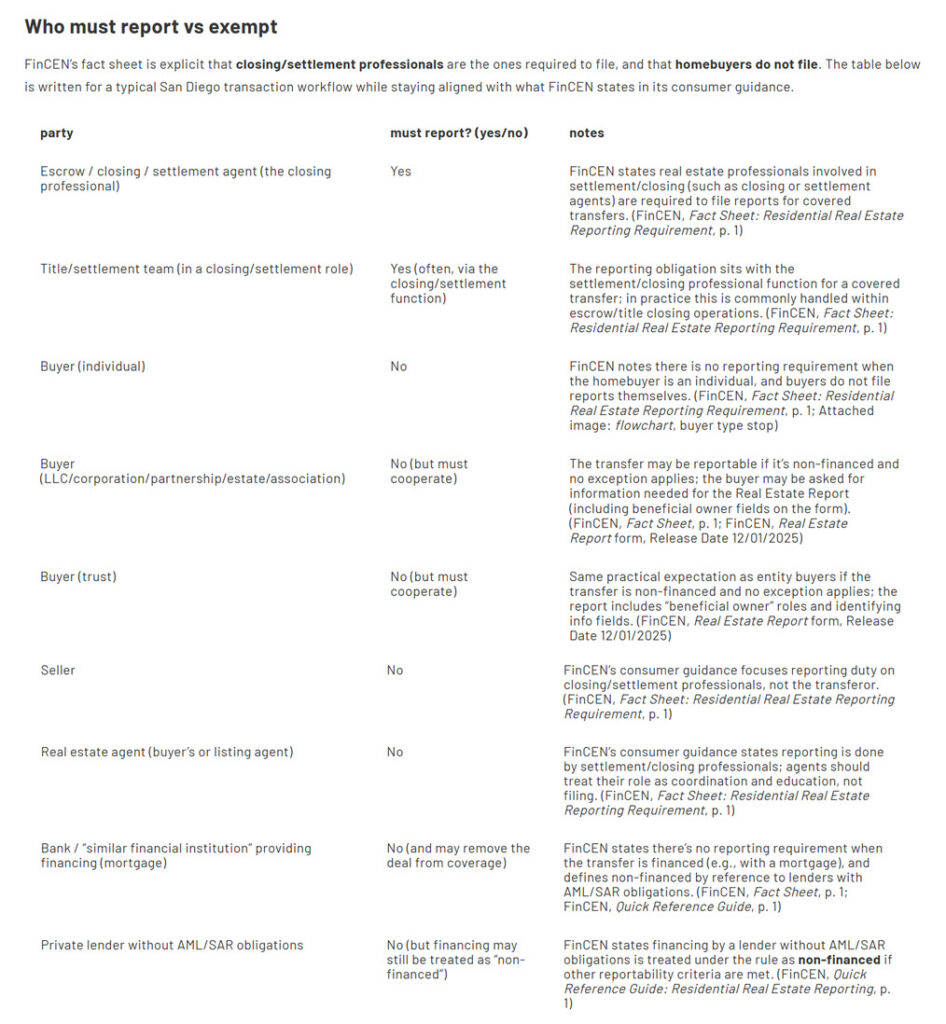
Who Is Responsible for Filing the FinCEN Report?
The rule designates a “reporting person” based on the transaction structure. In many cases, this may involve the escrow or title company, but it depends on the transaction.
Understanding who carries this responsibility before closing prevents delays.
Frequently Asked Questions About the FinCEN Real Estate Rule in San Diego
Does FinCEN apply to all cash purchases?
Not all. The rule applies to certain non-financed transactions involving entities or trusts. Individual buyers purchasing in their own name are generally not reportable.
Does a mortgage avoid FinCEN reporting?
If the lender has an Anti-Money Laundering (AML) program, the transaction may not be reportable under this rule.
Does this rule only affect luxury properties?
No. It applies to qualifying residential transactions regardless of price — but luxury markets often involve more entity purchases.
Is this a California rule?
No. This is a federal rule issued by FinCEN and applies nationwide, including San Diego.
Why It Matters for San Diego Buyers and Sellers
Regulatory changes can impact:
-
Transaction timelines
-
Documentation requirements
-
Privacy considerations
-
Entity structuring decisions
Understanding the rule early helps avoid surprises during escrow.
Guidance
If you are buying or selling residential property in San Diego and want clarity on how the FinCEN Real Estate Rule may affect your transaction, it’s wise to review your structure before entering escrow.
As Founding Partner of LuxeAlly Real Estate, I work closely with title, escrow, and legal professionals to ensure our clients understand regulatory changes that may impact their closing.
If you would like to discuss your specific situation — whether purchasing through an LLC, trust, or as an individual — I’m available as a resource.
Jeff Toth
Founding Partner, LuxeAlly Real Estate
San Diego, California
📞 858.630.8997
Clear guidance. Confident decisions. Compliant closings.


